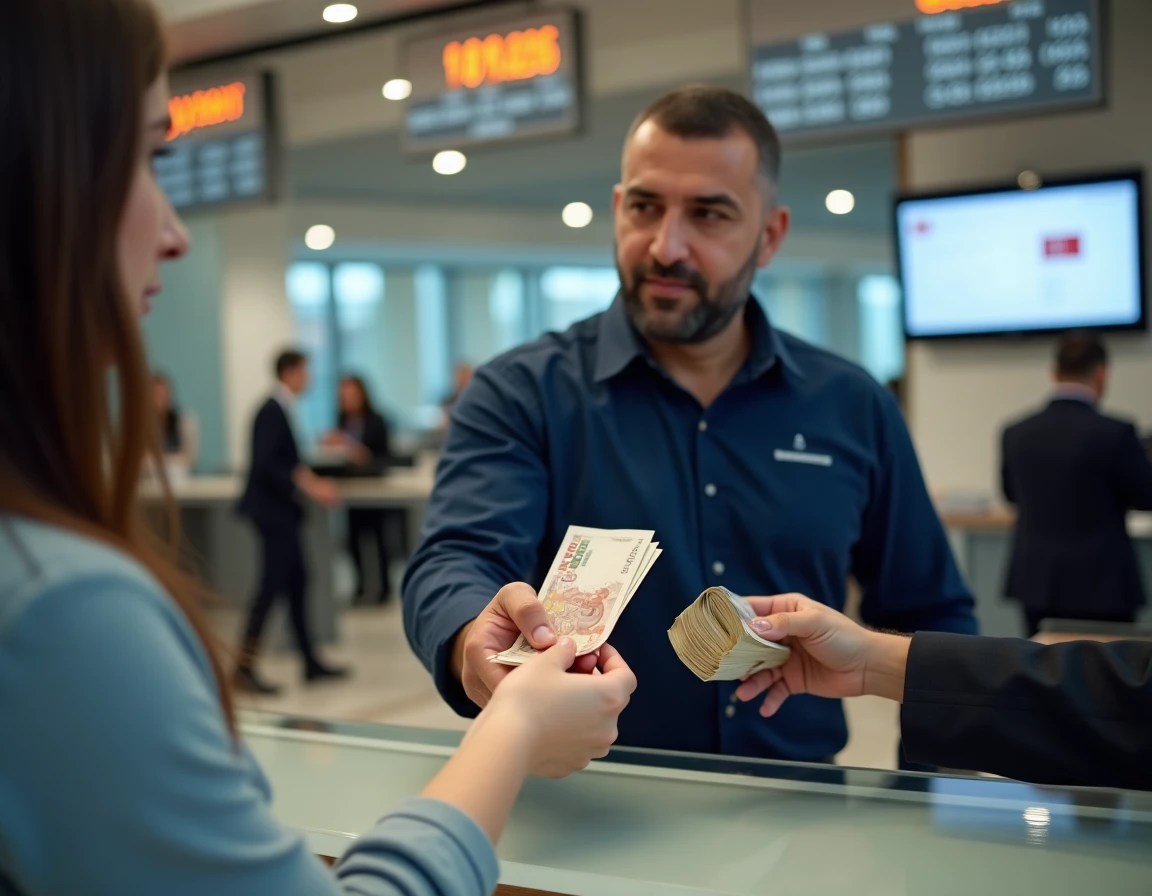
You have just landed in Istanbul, your wallet contains no Turkish lira, and the first taxi is waiting outside. This scenario is experienced by thousands of French travelers every week. Knowing where and how to exchange euros for Turkish lira in Turkey directly affects your trip budget, sometimes by several dozen euros per transaction.
Arriving without cash in Turkey: the trap of ATMs and dynamic conversion
When you arrive with a credit card as your only means of payment, the natural reflex is to look for an ATM in the airport hall. The problem can be summed up in two words: accumulated fees.
Turkish ATMs charge their own commission, which is added to that of your French bank. Your bank often charges a percentage on the amount withdrawn, plus a fixed fee per transaction. For a one-week stay with three or four withdrawals, the costs can add up quickly.
The other trap awaits at the moment of withdrawal or card payment: always refuse dynamic conversion to euros. The screen of the terminal or ATM sometimes offers to display the amount in your currency. Accepting means letting the local operator set the rate, which is significantly less favorable than that of your bank. Always choose to debit in Turkish lira (TRY).
For those who want to prepare their currency exchange strategy before departure, it is useful to compare options for exchanging euros for Turkish lira in Turkey based on your traveler profile and specific destination.
Currency exchange offices in Turkey: spotting good rates in the city
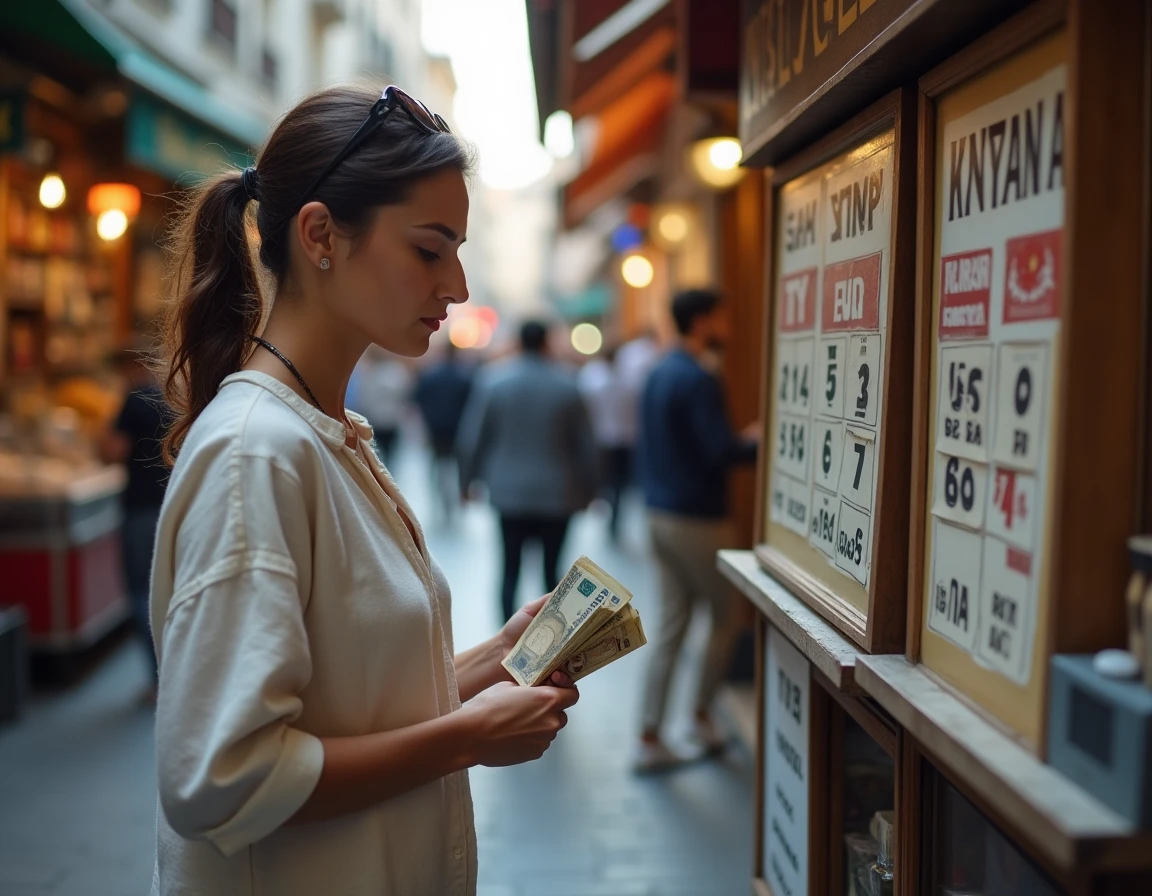
Turkish currency exchange offices, marked by the sign “Döviz Bürosu,” remain the most advantageous way to obtain Turkish lira in cash. They generally do not charge a commission and display rates close to the official rate. They can be found in all tourist areas, shopping districts in Istanbul, Antalya, or Izmir.
Here are a few tips to adopt:
- Compare at least two or three offices before exchanging, as rate differences exist even between neighboring establishments.
- Avoid currency exchange offices at airports and hotels, where rates are consistently less favorable than those in the city center.
- Prefer offices located in business districts or near the Grand Bazaar in Istanbul, where competition drives rates up.
In recent shopping centers in Istanbul like Zorlu Center or Istinye Park, some bank branches have exchange counters open to non-customers. Their rates are closer to the interbank market and are worth comparing to street offices.
High amounts and identity checks
Turkish authorities have tightened compliance checks in recent years. In practice, a passport may be required for currency exchange operations exceeding a certain threshold. If you plan to exchange a significant amount, have your identification document with you. Beyond a defined amount, cash currencies must also be declared upon entering the territory.
Multi-currency cards: locking in your rate before departure
Why endure the day’s rate at the airport when you can choose it yourself from your couch? European banking apps like Revolut, Wise, or N26 have changed the logic of currency exchange for travelers.
Locking in Turkish lira in advance via a multi-currency card allows you to convert your euros when the rate is favorable, sometimes several days before departure. When paying in Turkey, the card directly debits the balance in TRY, without reconversion or additional fees (within the free limits of each service).
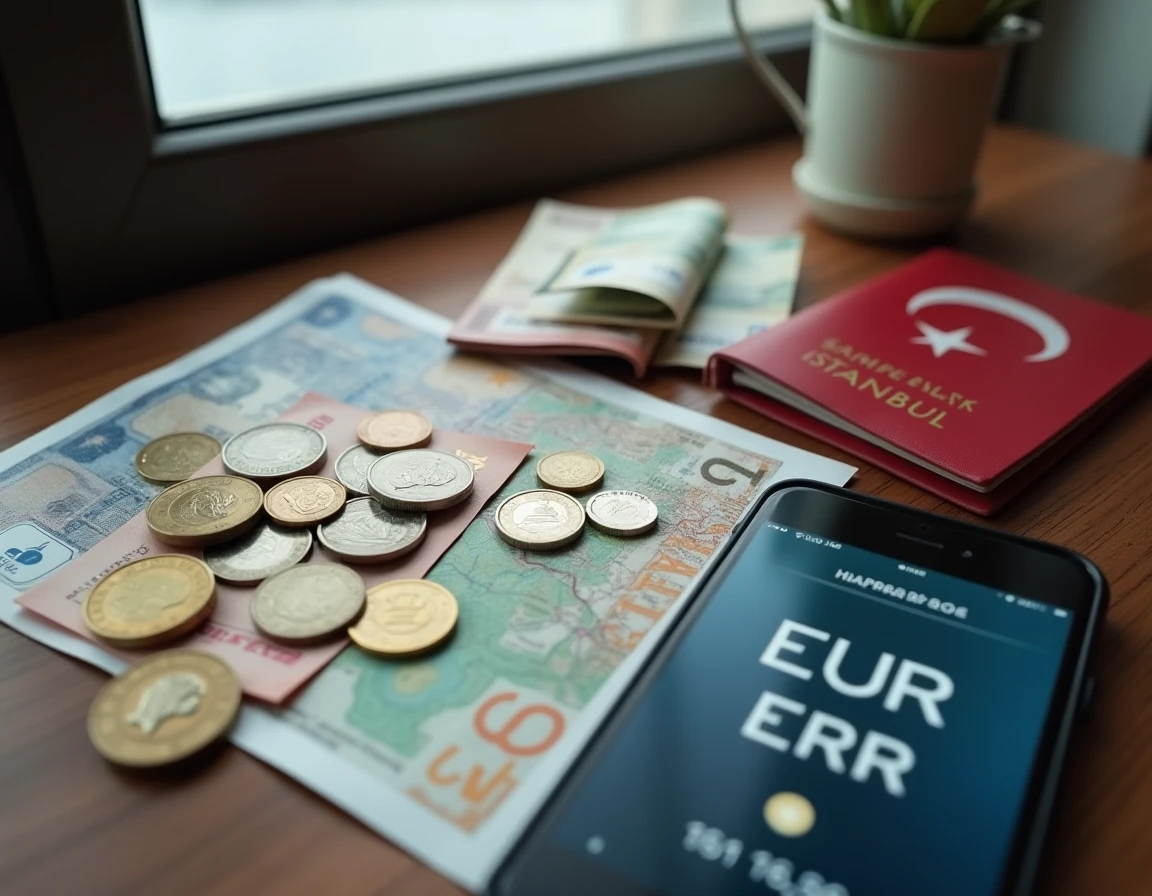
This approach transforms the question “where to exchange on-site” into a question of timing. You monitor the EUR/TRY rate from your app and convert when it seems advantageous. At the end of 2024, 1 euro was worth about 39 TRY, but this rate fluctuates regularly.
Paying by card rather than withdrawing cash
With a card that has low exchange fees, increasing direct payments reduces the need to withdraw cash. Restaurants, shops, and public transport in Istanbul widely accept credit cards. Fewer withdrawals mean fewer fixed commissions.
However, keep a small reserve of Turkish bills for markets, older taxis, or small neighborhood shops that only accept cash.
Turkish lira: should you exchange before leaving or on-site
The temptation to go through a French currency exchange office before departure exists. It is costly. Offices in France apply margins that are much higher than those practiced in Turkey. The stock of Turkish lira is limited there, and ordering delays prolong the process.
The most effective strategy combines two approaches:
- Convert part of your euros into TRY via a multi-currency app before departure, at the best rate found.
- Exchange a small amount in cash upon arrival at a currency exchange office in the city (not at the airport) to cover initial expenses.
- Pay the rest by card while systematically refusing dynamic conversion.
Finally, be aware that it is practically impossible to exchange your Turkish lira back into euros once you return to France. European currency exchange offices rarely accept them, or at a very unfavorable rate. Only exchange what you plan to spend.
Exchanging euros for Turkish lira is not complicated, provided you know the two or three mechanisms that inflate the bill: ATM commissions, dynamic conversion, airport rates. By avoiding them, you can save the equivalent of several meals on a one-week stay.