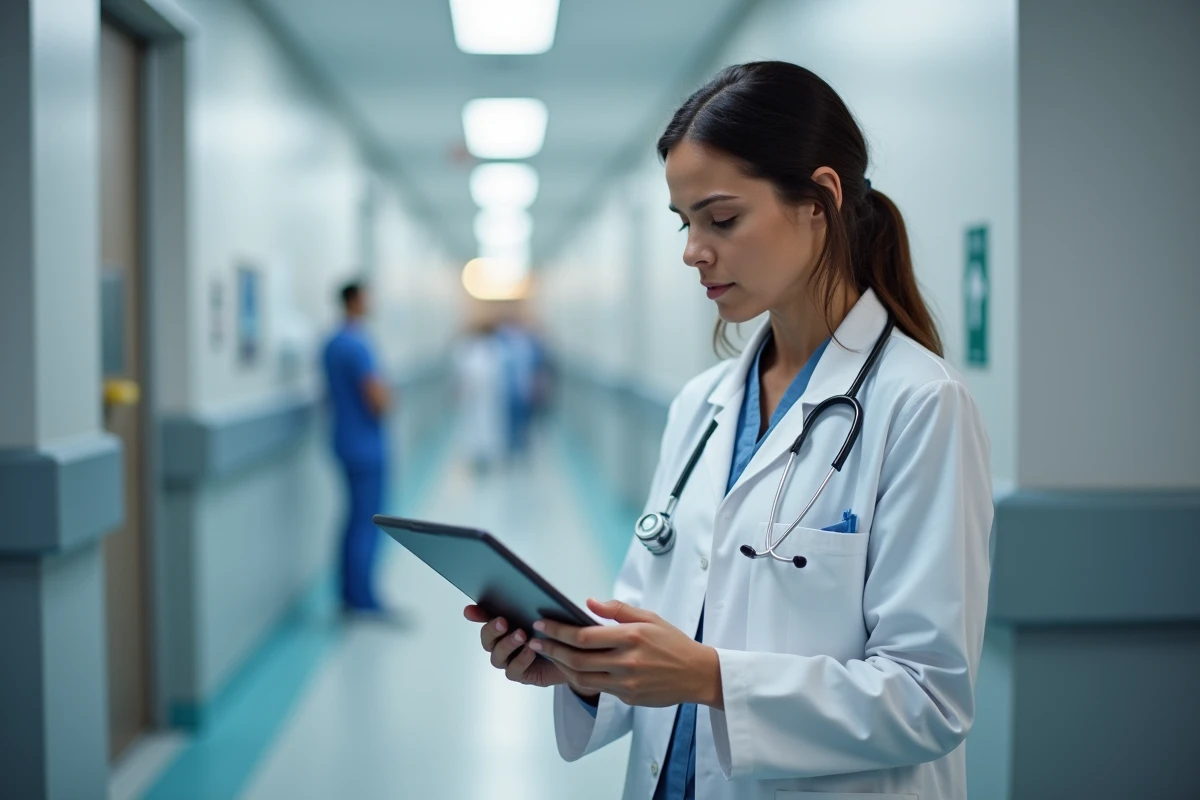
When a doctor in Lisbon asks for the opinion of a radiologist in Munich on a brain MRI, the question is not just technical. It touches on the compatibility of systems, patient data protection, and transmission time. The xpermd network has established itself as the operational response to this type of situation, connecting practitioners from different specialties across Europe.
Cross-border medical collaboration: what xpermd is changing concretely
You may have already noticed that a medical file created in one country is often unreadable in another? The formats vary, as do the nomenclatures. xpermd was designed to solve this problem at its core: the network uses standardized exchange protocols that allow a specialist to read and annotate a file produced by a colleague located in another European country.
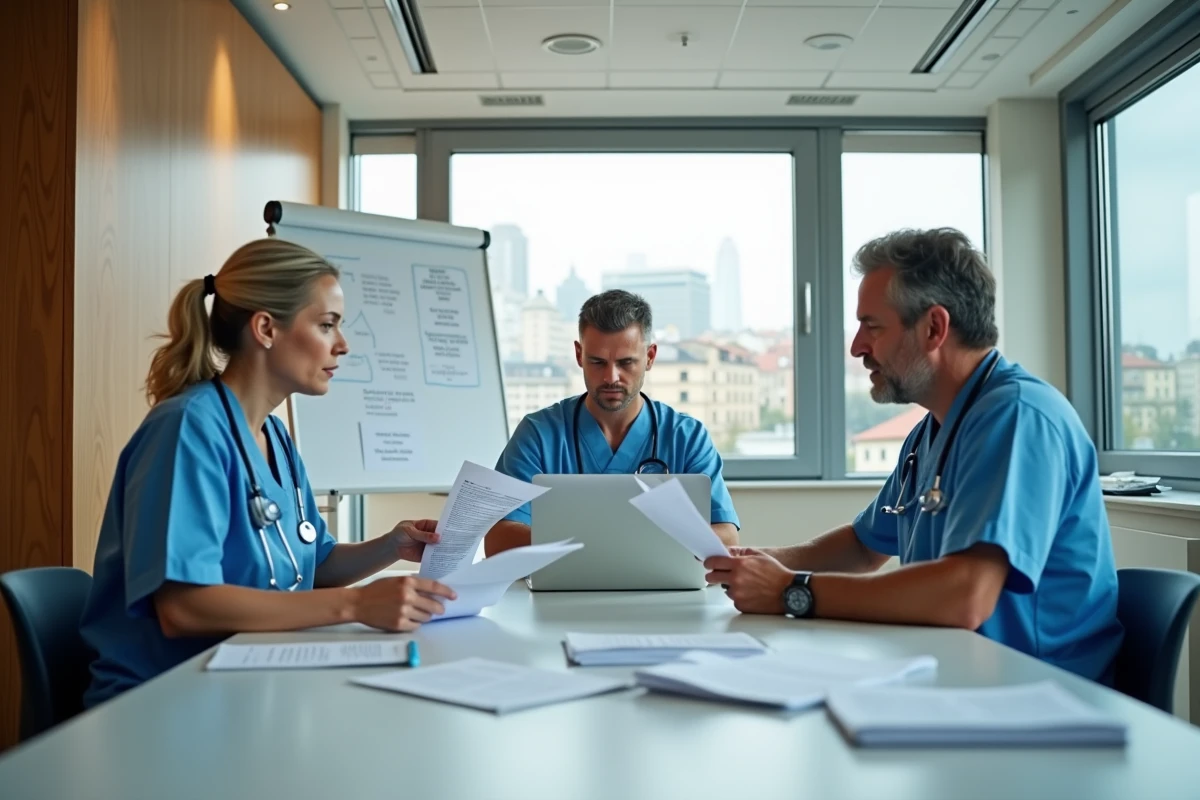
In practice, this means that a multidisciplinary opinion can be obtained in a few hours instead of several weeks. A vascular surgeon in Lyon can submit a complex case to a panel consisting of a Belgian angiologist and a German interventional radiologist, without leaving their usual platform.
To better understand the scope of this infrastructure, a detailed presentation of the xpermd network on Medic Com explains how this interconnection works on a continental scale.
This model is based on a simple principle: each expert center corresponds to a specific pathology. The patient does not need to travel to access rare expertise. Knowledge circulates, not the patient.

European medical network and patient data protection
Connecting practitioners from different countries poses an obvious problem: confidentiality. The rules vary from one state to another, even though the GDPR provides a common foundation. xpermd integrates a granular consent system.
What does this mean? The patient chooses which parts of their file are shared, with which practitioner, and for how long. It is not total access or nothing: it is modular, traceable, and revocable access.
- Consent is collected digitally and timestamped, with an audit trail accessible by the patient themselves.
- Medical data is transmitted via encrypted channels, without intermediate storage on uncertified third-party servers.
- Each access is logged: the practitioner, date, consultation duration, and type of data viewed are recorded.
This level of traceability exceeds what most national hospital systems offer. The patient retains effective control over their data, which addresses a legitimate concern in the context of the accelerated digitization of health.
Remote diagnosis and multidisciplinary care via xpermd
Remote diagnosis is not just about sending an image via email. For a remote opinion to have clinical value, the consulted specialist must have the complete context: history, ongoing treatments, high-resolution imaging, biological results.
xpermd structures these exchanges. The network offers a shared file format that automatically aggregates relevant documents. The consulted specialist does not receive an isolated file, but a synthetic view of the patient’s journey.
Why does this detail matter? Because a uterine fibroid seen on an MRI is not interpreted the same way depending on whether the patient has already undergone embolization or not. The clinical context changes the interpretation of the image. Without access to the history, the risk of diagnostic error increases.
Exploration and diagnosis in half a day
Some centers in the xpermd network offer concentrated diagnostic pathways. The patient undergoes all their examinations (imaging, biology, specialized consultation) in half a day, with results provided on the same day.
This format reduces the time spent in diagnostic limbo. For pathologies like varicocele or fibroids, where delays in care have direct consequences on fertility or quality of life, shortening the diagnostic pathway changes the prognosis.
Access to specialized care in under-equipped areas: the limit to watch
A digital network does not compensate for the lack of equipment. A rural hospital that does not have a recent scanner will not be able to produce usable images remotely, even with the best sharing platform.
xpermd connects already equipped centers. The risk, as the network grows, is to widen the gap between facilities that can participate and those that remain outside due to lack of infrastructure.
- Large university hospital centers fully benefit from the network: they have the equipment, trained staff, and bandwidth.
- Local structures in rural areas often remain dependent on older systems that are incompatible with the network’s exchange standards.
- Without a targeted support program, the digital divide in health is likely to worsen rather than diminish.
This point does not diminish the contribution of the xpermd network to the European medical sector. It reminds us that technology alone is not enough. The challenge in the coming years will be to expand access to the network to institutions that need it most, not just to those that are already well-equipped.
The xpermd network has reached a critical mass that makes it difficult to bypass for any medical cooperation project in Europe. Its value lies less in the technology than in the community of practitioners who use it daily. One question remains open: how to ensure that this dynamic also benefits territories that are starting from further behind.