
We are looking for a carpooling option for a recurring commute, we start a search on the first platform we find, and the results show three ads that are six months old. The problem does not stem from a lack of drivers: it often comes from not targeting the right tool or checking if a local aid already finances part of the trip. Finding a carpool online in 2024 requires less patience than method.
Local carpooling aids: the lever most passengers ignore
Before even comparing platforms, it’s wise to check what your intercommunal authority or region offers. Since 2024, several local authorities directly subsidize commuting trips via applications like BlaBlaCar Daily or Karos. The passenger pays a reduced fare, and the driver receives compensation.
In Liffré-Cormier, a system launched on September 30, 2024, allows users to enter their addresses and weekly schedule to automate the connection between driver and passenger. No more manual searching for a ride: the app suggests matches every morning.
Areas that maintain their incentives over time record up to seven times more trips per inhabitant than those that have offered no aid. You can check the Sport Cars website for carpooling to understand the search mechanisms before diving into a specific platform.
In practical terms, the first step is to contact your employer or community of municipalities to find out if a partnership exists with a carpooling app. Many employees miss out on substantial discounts simply because information circulates poorly internally.
Long-distance carpooling or commuting: adapting your search
The most common confusion is using the same tool for a round trip Paris-Lyon and for a daily twenty-kilometer commute. These two needs fall under different logics, and the platforms that address them are not the same.
Occasional and long-distance trips
BlaBlaCar remains the reference for occasional trips in France. The user base is large, and the geographical coverage is extensive. You can easily find a driver for a weekend or an unexpected trip.
However, BlaBlaCar is not designed for short regular trips. The ads are intended for occasional travel with advance booking, not for repeated carpooling five days a week.
Daily commuting trips
For daily carpooling, applications like Karos specifically target commuting trips. Karos works with companies and local authorities: you enter your address, your schedule, and the algorithm suggests compatible drivers in the same time slot.
BlaBlaCar Daily also covers this segment, especially in urban and suburban areas. The choice between these tools mainly depends on the active partnerships in your geographical area. Feedback varies on this point, as user density changes significantly from one urban area to another.
Carpooling lines: a solution when traditional ads yield nothing
In less dense areas, posting a carpool ad can go unanswered for weeks. This is precisely where organized carpooling lines change the game.
The principle: dedicated stops are installed along a busy route, reservations are made via an app or SMS, and in some networks, a taxi or VTC relay takes over if no driver is available. You won’t be left stranded.
The Lane lines, deployed in the eastern Lyon area, recorded over 30,000 trips in 2023 with an average wait time of less than four minutes, according to the operator Ecov. This model is closer to public transport than to traditional carpooling, and that makes it reliable for daily use.
To find out if carpooling lines exist near you, you can check with your urban community or search for your department’s name along with the terms “carpooling line” or “carpooling stop”.
Optimizing your profile and online carpooling search
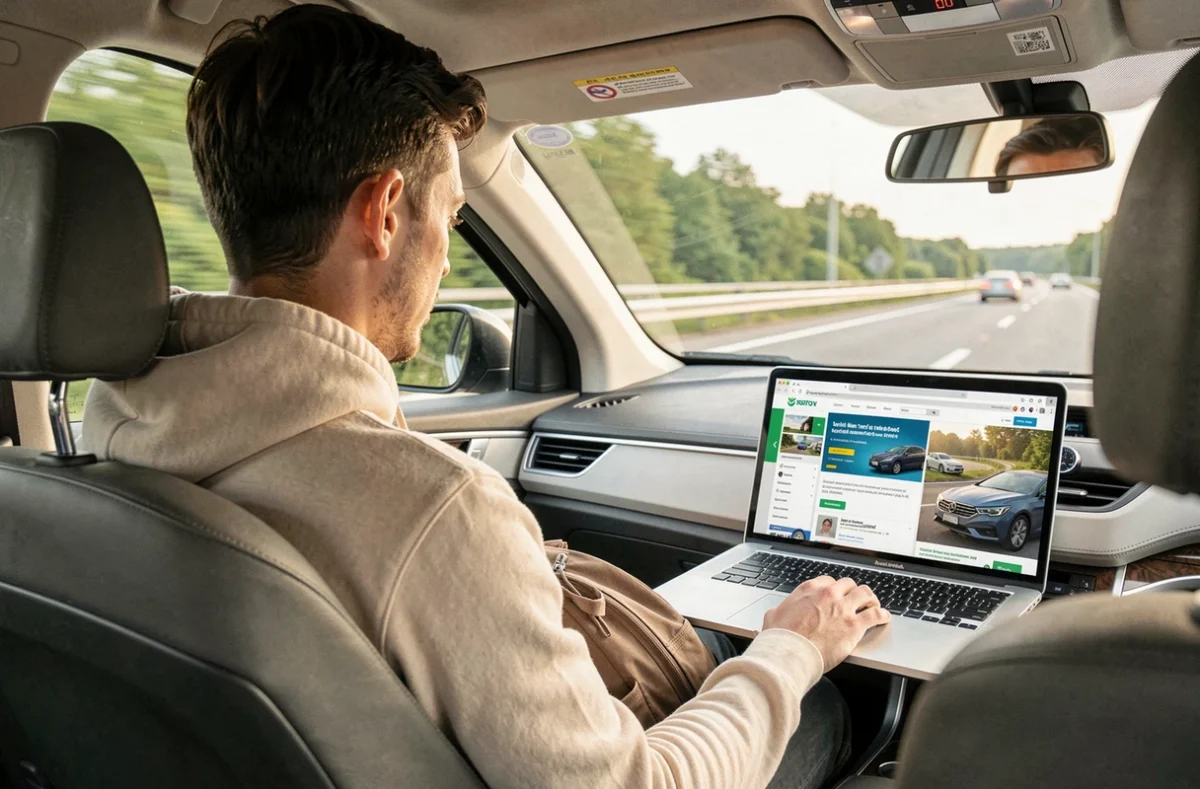
Once the right platform is identified, a few adjustments can make the difference between a search that concludes in ten minutes and one that drags on for days.
- Enter your schedule accurately: on commuting carpooling apps, the algorithm works by time slots. A fifteen-minute shift in the departure time significantly expands the number of compatible drivers.
- Activate alerts and notifications instead of checking manually every day. Most platforms send a message as soon as a matching trip is posted.
- Complete your profile (photo, identity verification, reviews): drivers are more likely to accept a passenger whose profile inspires trust. On BlaBlaCar, verified profiles receive significantly more responses.
- Widen the departure or arrival point by a few hundred meters. A nearby tram stop or park-and-ride can unlock invisible matches with the exact home address.
On commission-free platforms like Mobicoop, the trip costs the passenger less since the site takes no fees. This cooperative model attracts a smaller community, but users are often more committed to regularity.
Carpooling and auto insurance: a point to check before posting
A driver offering carpooling does not need specific insurance as long as the cost-sharing does not generate profit. The principle is clear: carpooling remains legal as long as the driver does not make money.
In practice, it is advisable to check that your auto insurance policy covers the transport of passengers in the context of cost-sharing. Some insurers exclude this situation in their specific clauses, especially for company vehicles.
For a passenger, the check mainly concerns the platform used: those that integrate an online payment system generally offer coverage or additional assistance in case of an incident during the trip.
Online carpooling relies less on the chosen platform than on three concrete elements: available local aids, the distinction between occasional and regular trips, and the completeness of your profile. Cross-referencing these three parameters before launching your first search saves considerable time.