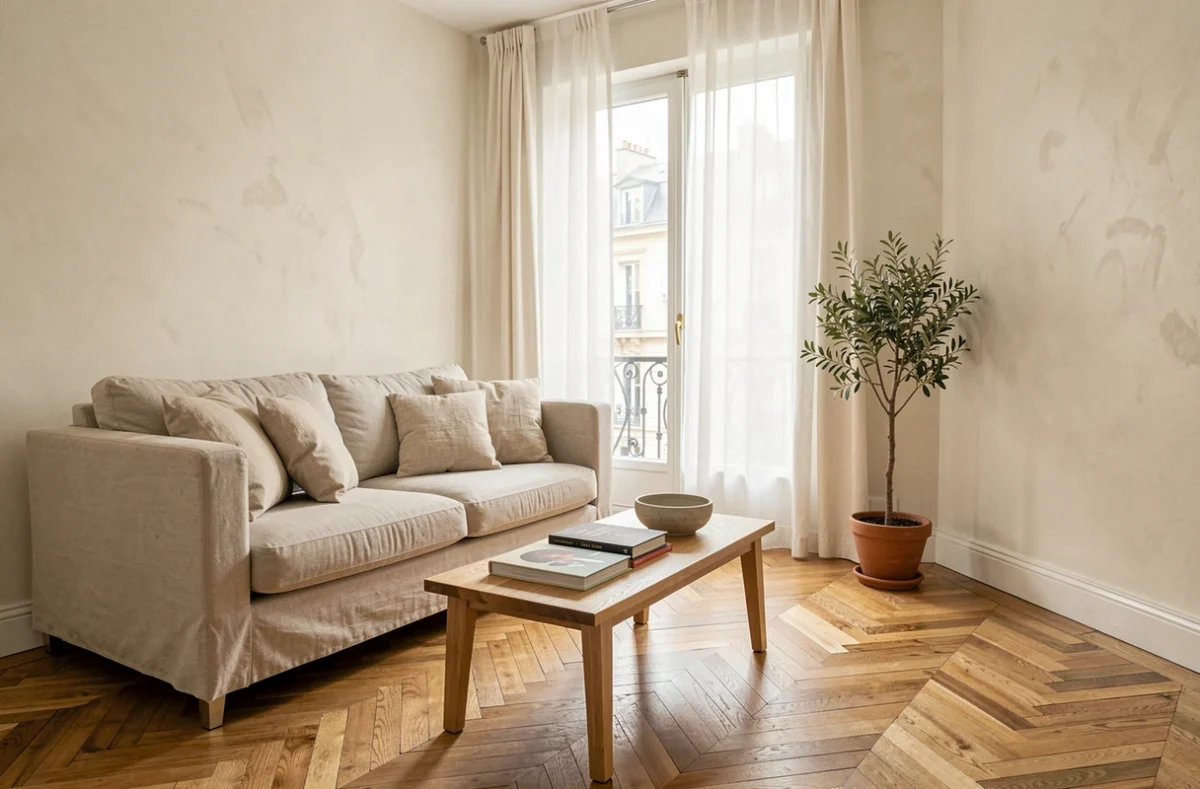
The decorative enhancement of a property before sale is not limited to decluttering and the coats of white paint described by most guides. Several technical levers, rarely discussed, allow for modifying the perception of a home without engaging in heavy renovations. Here, we detail the interventions that truly impact the sales timeline and the quality of offers received.
Energy label and home staging: the blind spot of real estate enhancement
A well-maintained interior does not compensate for an unfavorable energy performance diagnosis (DPE) displayed right from the listing. Since January 1, 2025, the regulatory energy audit covers homes classified as E, in addition to the already affected F and G properties. An informed buyer checks this information even before stepping through the door.
Another technical point to verify before any sale: since January 1, 2026, the electricity conversion factor in the DPE calculation has changed from 2.3 to 1.9. For an all-electric home, this can be enough to gain a letter on the label without any renovations. The previous DPEs concerned can be updated for free via the Ademe observatory.
Before investing in decoration, it is therefore relevant to have the diagnosis recalculated. A property that moves from E to D in the listing attracts a significantly higher volume of visits than a property that remains at E with an impeccable interior. Document preparation precedes aesthetic preparation.
Sellers who wish to combine decorative enhancement and technical diagnosis can consult D Kom Déco immo to identify the most profitable interventions according to the property’s profile.
Color palette and perception of volumes by room
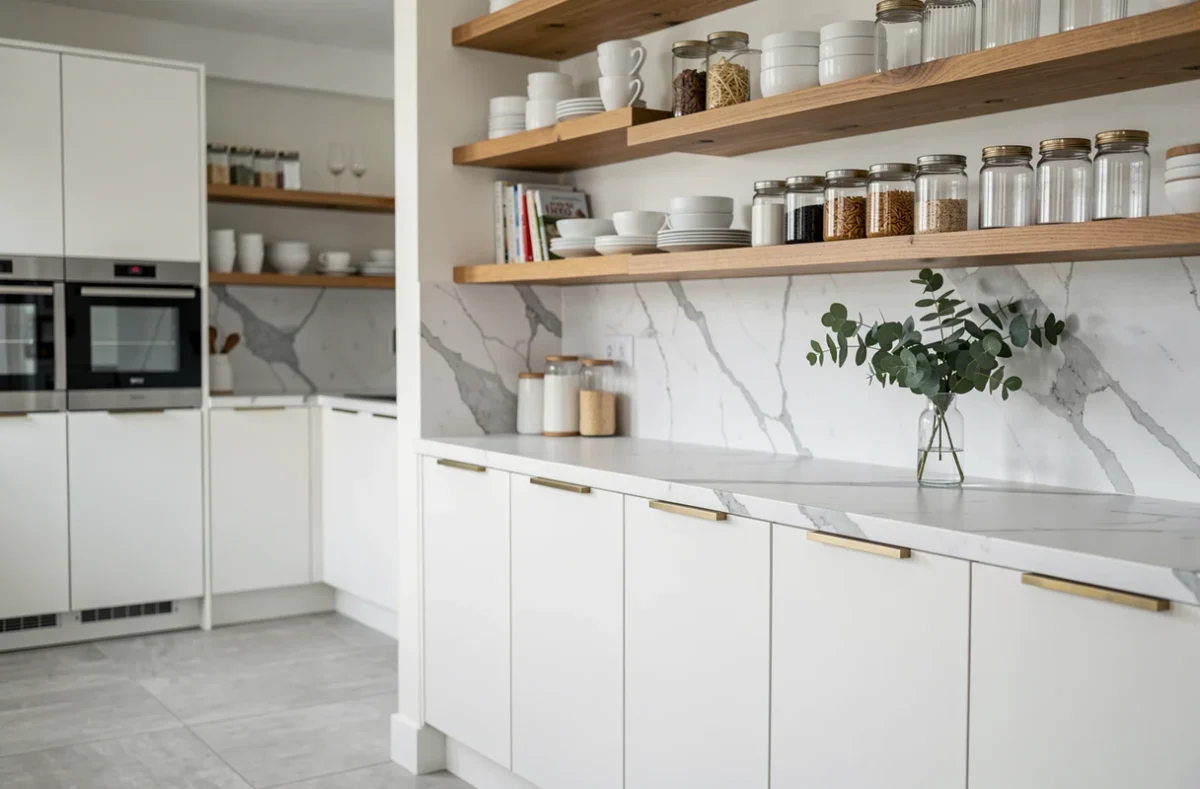
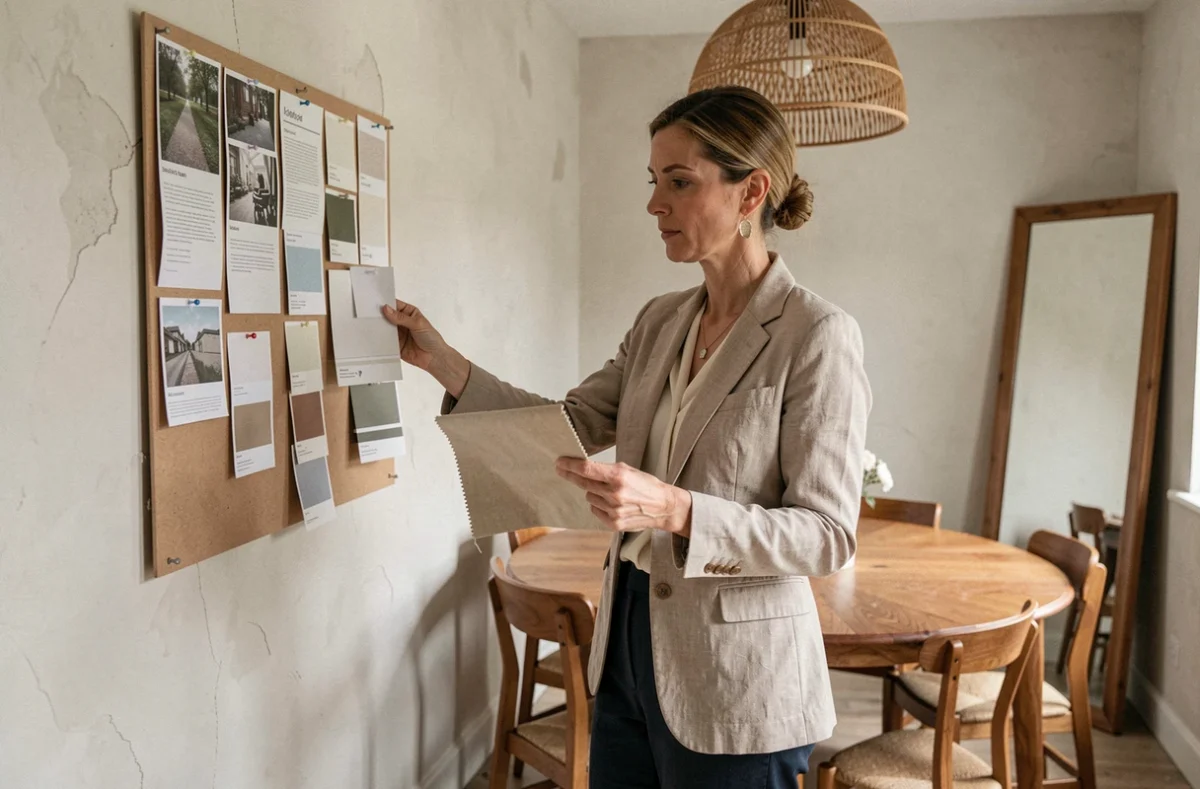
The chromatic choice is not limited to “painting in white.” A too-cold white (like pure white RAL 9010) in a north-facing room creates a clinical effect that cools the visit. A warm off-white or light greige is better suited for north and east orientations.
The room-by-room logic is more effective than a uniform shade throughout the entire home:
- Living room and lounge: warm neutral tones (linen, greige, sand) that absorb natural light without dulling the space, paired with an accent wall in a muted shade if the area exceeds twenty square meters.
- Kitchen: prefer matte finishes on the walls to limit greasy reflections, and concentrate shine on the backsplash or countertop.
- Bedroom: rosy beige or very desaturated sage green works as a universal calming signal, while anthracite gray visually reduces the space.
- Bathroom: white remains relevant, provided a textural element (fiber basket, coordinated thick towels) is added to break the monotony.
The goal is not to please all tastes but to eliminate immediate visual objections. A buyer does not say “I like this color”; they feel comfort or discomfort within the first few seconds.
Visit lighting: the most underestimated lever in real estate decoration
The majority of visits take place during the week, often in the late afternoon when natural light declines. A poorly lit property loses attractiveness regardless of the care given to the furniture or walls.
Each room should have at least three light sources of complementary temperatures: a ceiling light or pendant for general lighting, a floor lamp or wall sconce for ambient light, and a supplementary light source (table lamp, adjustable spotlight) to highlight an architectural element or a nook.
The color temperature plays a precise role. Bulbs between 2700 K and 3000 K produce a warm light suitable for living spaces. Beyond 4000 K, the ambiance turns tertiary. Replacing all bulbs in a home with a uniform temperature represents a minimal investment for an immediate effect on the perceived coherence of the interior.
A detail often overlooked: yellowed or cracked visible switches and outlets. Their replacement costs a few euros per unit and eliminates a sign of wear that the buyer registers unconsciously.
Furniture staging: circulation and visual hierarchy
Home staging is not about emptying the rooms. A completely bare space hinders projection just as much as a cluttered space. The challenge is to create a clear visual hierarchy in each room: a focal point, a readable movement circuit, no furniture blocking a passage or masking an opening.
In a living room, the sofa defines the focal point. If it turns its back to the main window, the room appears darker and narrower. Repositioning it perpendicular to the light source opens the perspective and guides the gaze outside.
For small spaces (studio, two-room apartment, old partitioned apartment), removing a bulky piece of furniture sometimes frees up more perceived value than a complete refresh of the walls. One square meter of visible floor changes the perception of the total area.
Exteriors and visible areas before the front door
The landing, staircase, garden, or balcony constitutes the first visual contact. A worn doormat, a rusty mailbox, or empty planters send a signal of neglect even before the visit begins.
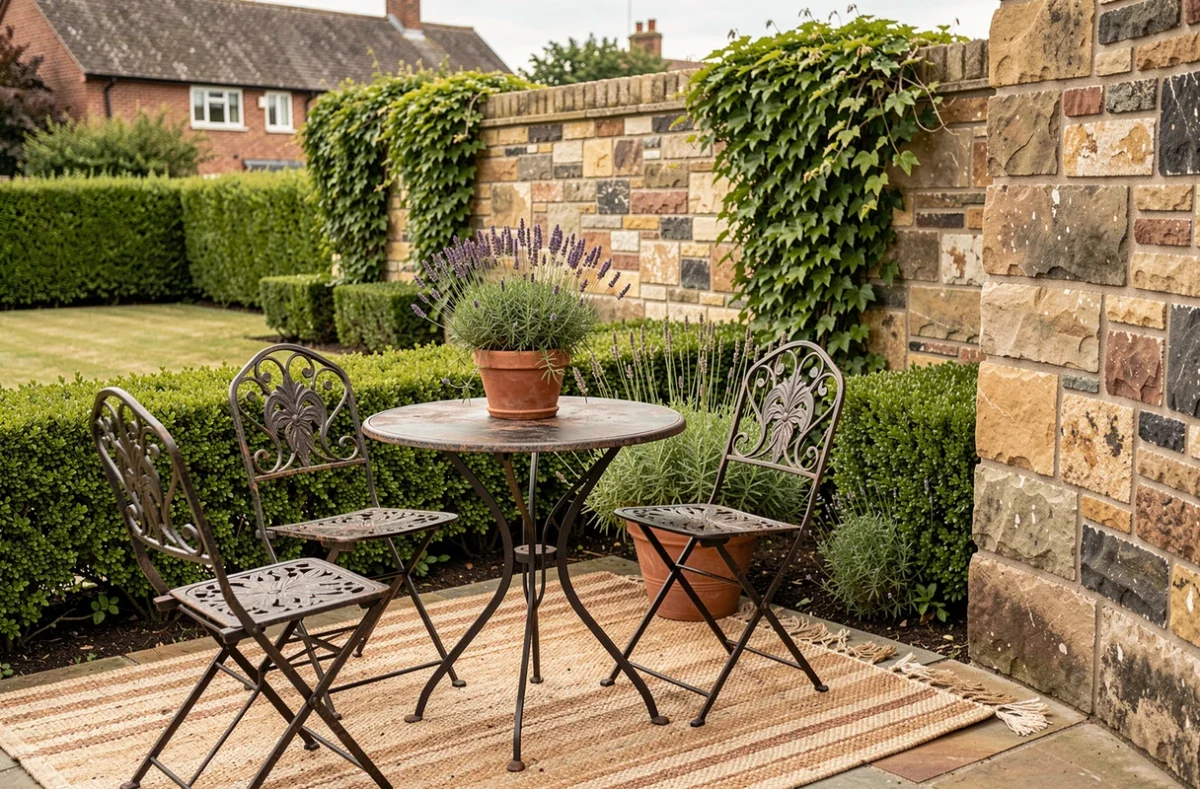
On a balcony or terrace, a side table with two chairs and a green plant is enough to transform a perceived storage space into an extension of living space. For a house, a clean pathway and functional outdoor lighting on the evening of the visit change the overall tone.
The coherence between the exterior and interior matters more than the individual quality of each space. A refined interior preceded by a degraded hall creates a dissonance that the buyer translates into doubt about the overall maintenance of the property.
The decorative preparation of a property before sale benefits from being treated as a technical whole: up-to-date energy diagnosis, color palette adapted to each orientation, calibrated lighting for actual visit conditions, furniture repositioned to increase circulation. These targeted, often low-cost interventions shorten the sales timeline more effectively than poorly prioritized partial renovations.