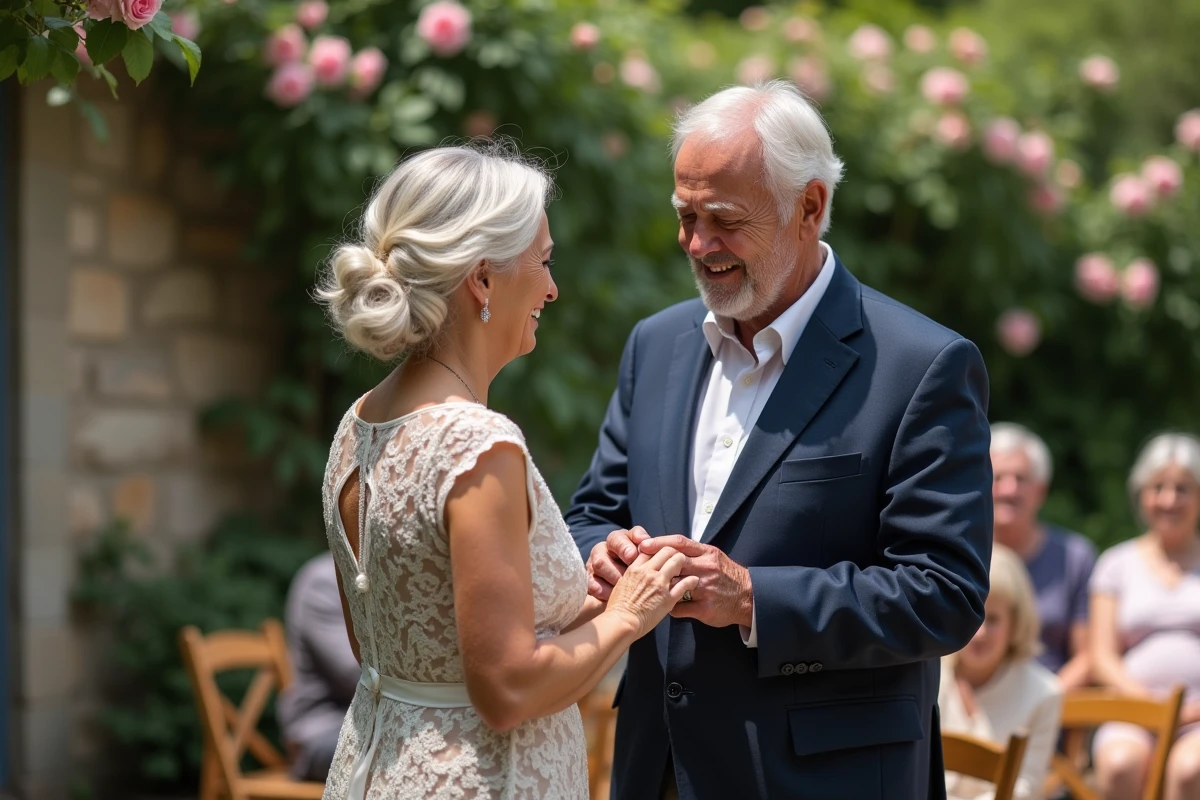
Marriage after 70 is progressing significantly, driven by women who have gone through widowhood or divorce, and by men who are rediscovering life as a couple after a long period alone. What does an official union at this age really change about health, autonomy, and daily life?
Marital Regime and Spousal Protection After 70
The first topic raised by notaries when a couple over 70 considers marriage concerns the marital regime. After this age, the default legal regime is separation of property, which protects the respective assets and heirs on each side.
This particularity reassures blended families. It also allows the surviving spouse to benefit from a lifelong right to the common housing, a protection that cannot be obtained with simple cohabitation or a PACS under the same conditions.
At the same time, marriage automatically opens rights to the survivor’s pension of the deceased spouse. For retirees with modest pensions, this financial advantage can represent a crucial safety net. Understanding the benefits of marriage at 70 starts with this patrimonial and inheritance perspective, well before sentimental considerations.
Late Marriage and Health: What Available Observations Show
Data reported by National Geographic indicate that married people have a better self-esteem, a stronger sense of belonging, and are more likely to report happiness than single individuals of the same age. Physical contact, companionship, and words of love release well-being hormones like oxytocin.
Physically, life as a couple changes care behaviors. A spouse notices a symptom, insists on consulting, accompanies to medical appointments. The presence of a partner improves daily medical follow-up, an underestimated factor in preventing dependency.
| Dimension | Single Person After 70 | Married Person After 70 |
|---|---|---|
| Medical Follow-up | Depends on personal motivation alone | Mutual reminders, accompaniment to consultations |
| Self-esteem | May decline with isolation | Strengthened by daily emotional connection |
| Legal Protection of Housing | No automatic protection (cohabitation) | Lifelong right to common housing |
| Survivor’s Pension | Not accessible | Accessible under marriage duration conditions |
| Physical Activity | Tendency to withdraw | Stimulation through outings and shared projects |
This table does not claim that marriage cures anything. It highlights concrete gaps in daily life, which the quality of the relationship directly conditions. A conflictual marriage produces the opposite effect.
Functional Autonomy and Prevention of Loss of Independence
Beyond overall longevity, the link between couple life after 70 and maintaining functional autonomy deserves particular attention. Walking together, cooking for two, organizing outings: these mundane activities constitute a form of regular physical and cognitive stimulation.
Organizations dedicated to seniors report that couples maintain their ability to manage daily tasks (shopping, administrative management, housing maintenance) longer. The distribution of efforts between two people delays the moment when external help becomes necessary.
- Preparing meals together encourages a more varied and regular diet, a key factor in preventing malnutrition in those over 70.
- Shared outings (walking, shopping, visits) maintain a higher level of physical activity than that observed in isolated individuals.
- Daily conversation stimulates cognitive functions and reduces the risk of withdrawal.
It is not marriage as a status that produces these effects. It is the committed cohabitation, the shared routine, the fact of counting for someone in daily life.
First Union After 70: A Radically Different Relationship to Partnership
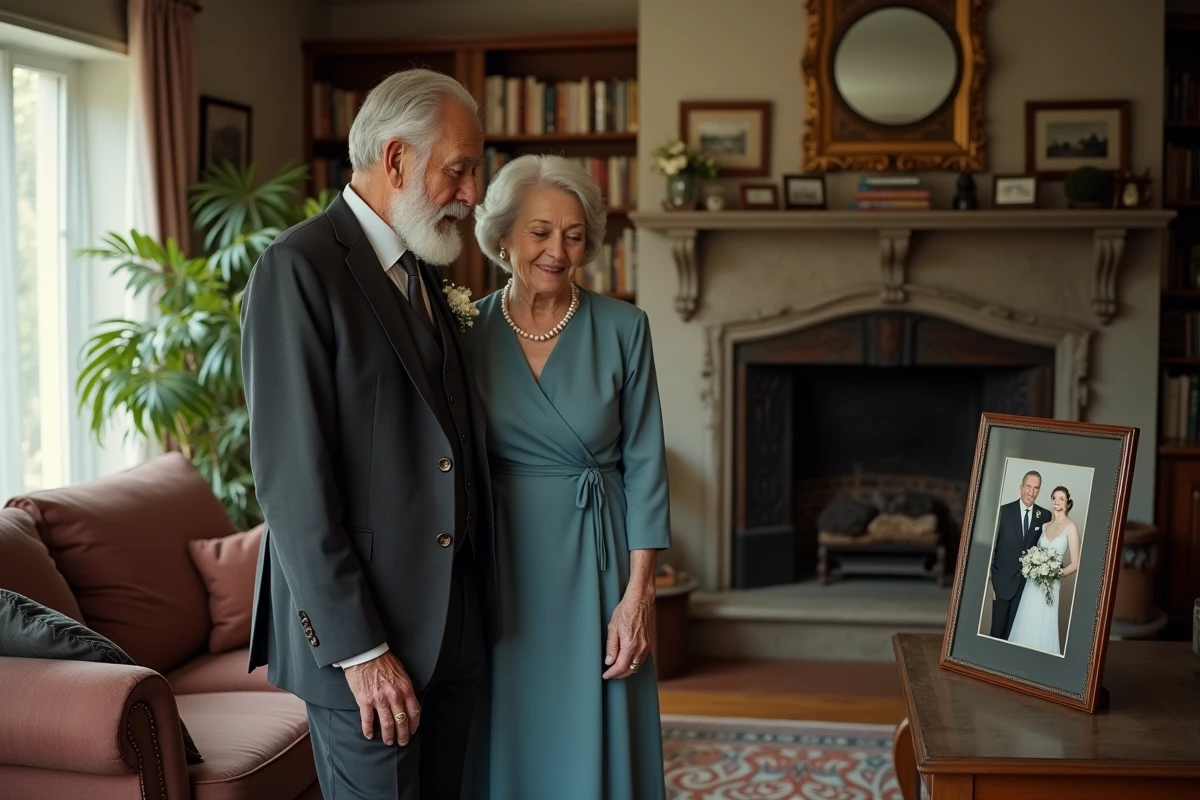
Getting married for the first time at 76, as recounted in a testimony shared by aufeminin, changes the very nature of the marital project. It is no longer about building a family, buying property together, or planning a career as a couple. The couple becomes a space of freedom and daily gratitude, free from traditional obligations.
This configuration produces an unexpected effect on self-esteem. After decades spent conforming to an expected life path (work, children, retirement), discovering that one can still freely choose an emotional commitment rebuilds the relationship with oneself.
Women are particularly affected. After widowhood or divorce, many hesitate for a long time before committing again. Platforms and organizations dedicated to seniors observe a visible increase in requests for remarriage or official union among women over 70, motivated by a refusal of solitude despite good autonomy.
Reactions from Family and Managing Family Resistance
The announcement of a marriage at 70 or older provokes mixed reactions. Adult children often worry about inheritance or fear a form of manipulation. These resistances are normal and documented by testimonies collected by Ircantec.
Addressing the inheritance issue before the ceremony defuses most tensions. Choosing the separation of property regime, having a clear will, and having an open discussion with heirs are sufficient in most cases.
Friends and peers react more positively. For many people of the same age, seeing a loved one marry after 70 represents a form of hope, proof that emotional life does not stop at retirement.
Very late marriage does not magically correct loneliness. It formalizes a mutual choice that, when based on a quality relationship, concretely changes the health, autonomy, and legal protection of both partners. The observed benefits directly depend on the quality of the daily bond between spouses, not just on the administrative status alone.